

A.I. to ease quality control in the pharmaceutical industry

In any factory, every day, a problem arises. But when it occurs on a site that manufactures cancer or multiple sclerosis drugs, the consequences can be catastrophic. Merck Serono Aubonne has developed an artificial intelligence solution capable of assessing the criticality of these "deviations", so that the right decisions can be taken as quickly as possible.
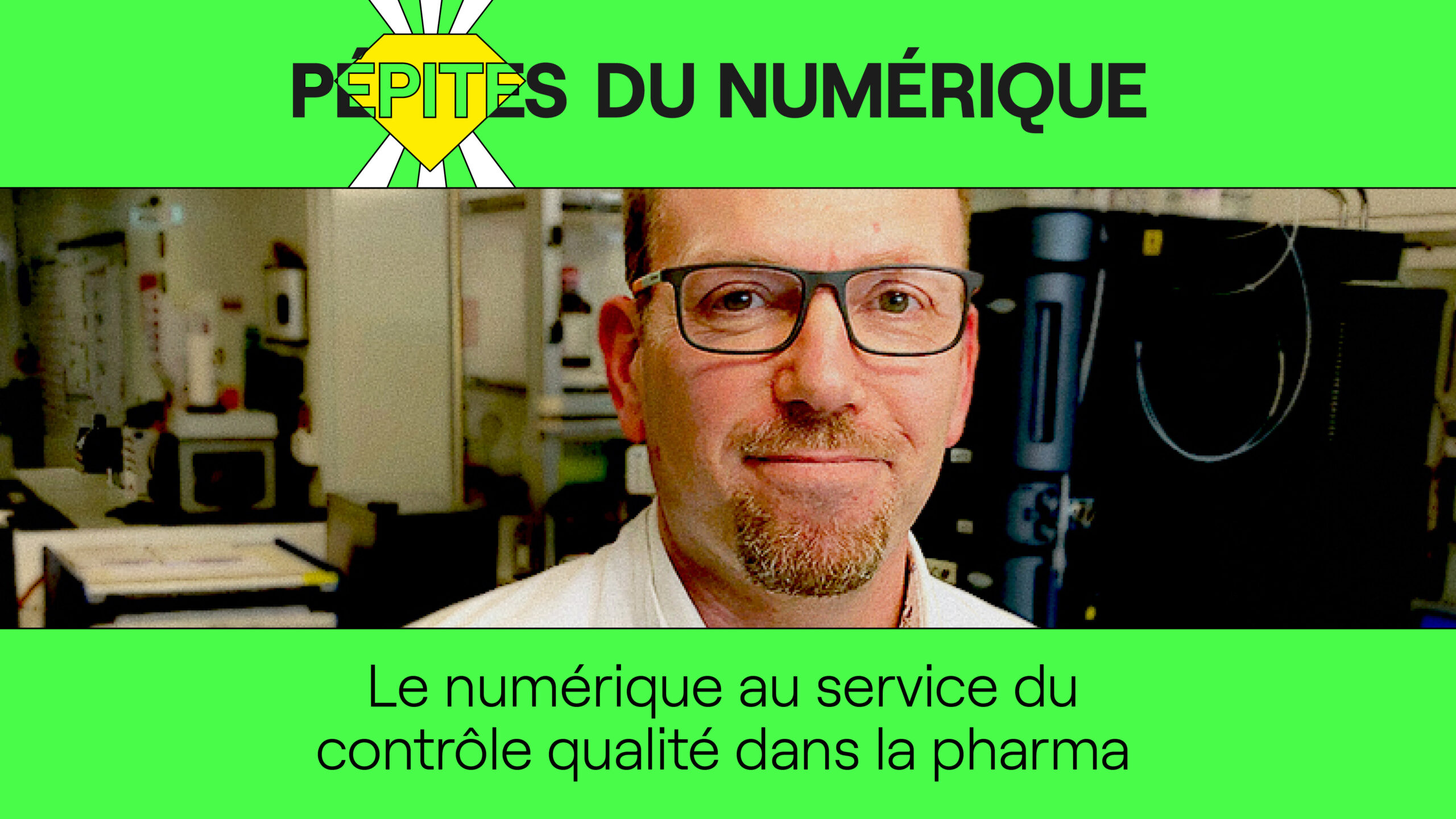
Christophe Martin has come a long way. Three countries, five companies, always in the pharmaceutical industry. In 2015, he moved to Aubonne (VD) to head up the quality unit at Merck Serono Laboratories (now employing 179 people). Inside: a long-standing interest in artificial intelligence, inherited from the time when his father worked with decision algorithms known as "expert systems".
His arrival coincides with the forced digitalization of a conservative sector. Until the mid-2010s, with the exception of office automation and SAP, pharma was still very much a paper-based industry," recalls the engineer. Then everything accelerated: the digitization of all our processes generated an immense amount of data, grouped together in dashboards."
Investigation or not?

One set of data is of particular interest to the quality manager: the description of incidents (known as "deviations") that occur in the plant, from raw material intake to finished product storage. Recorded by all 800 employees, these deviations are then qualified by the quality team according to their criticality.We receive one to five deviations a day, and always have around a hundred in the pipeline," explains Christophe Martin. The impact can be enormous, even stopping production.
Problem: one out of every two major deviations turns out to be minor. This slows down production and has a cost: resolving a major deviation costs CHF 8,000, four times more than a minor one, as it involves setting up an investigation team. In February 2020, Christophe Martin hired an apprentice fromIdiap (a Valais-based research institute specializing in artificial intelligence) via their AI Master's program, to work on this subject.

Putting resources in the right place
Eighteen months later, after a year of data cleansing and labeling, and the remainder of coding, the quality unit is equipped with an intelligence solution that has learned to qualify the criticality of deviations according to their description.Obviously, it doesn't make any decisions, " warns its manager. But it limits the back-and-forth between us and production, and helps us decide faster. We're now putting our resources in the right place when it comes to implementing corrective measures, and we're much more relevant in our preventive actions." The next step is to secure a supply chain damaged by the Covid crisis with a similar system.
The Merck Serono - Idiap partnership in 3 figures
- 18 months: the time it took to bring this project to fruition
- CHF 80,000: the amount invested in this development
- 15,000 hours/year: the time saved by the quality unit thanks to this solution
"Today, the pharmaceutical industry is struggling to meet hospital demand. Making our drug supply more reliable thanks to A.I. not only increases our competitiveness, it also solves a public health problem." Christophe Martin, Quality Director, Laboratoires Merck Serono
Portrait by Charles Foucault-Dumas

Digital nuggets in French-speaking Switzerland
This AI project is the 1st Pépite romande du numérique (digital nugget) selected by the Alp ICT, BioAlps, CleantechAlps and Micronarc platforms, which, thanks to their fieldwork, discover remarkable innovation projects every year that are not yet widely publicized. Most of the time, these are projects within companies that use digital technologies to meet their internal needs or to develop their business.
The term "nugget" was chosen in reference to the gold nuggets that form in geothermal springs, through cracks in hard rock, and therefore in hard-to-reach places. A nugget is not necessarily known; it has value, but it can remain hidden if no one is looking for it.
That's why the platforms have decided to reveal these hidden nuggets, starting in 2022, through a series of monthly portraits. It's a great way to showcase the dynamism of our regional companies, inspire the ecosystem to innovate, and make technologies more accessible. Each month, we share the portrait of a new nugget: how did the project come about? by what means? what were the challenges? what are the returns on investment?