


After its success at Solar Decathlon 2017, the NeighborHub comes to life on the blueFACTORY site in Fribourg
Visits starting this spring
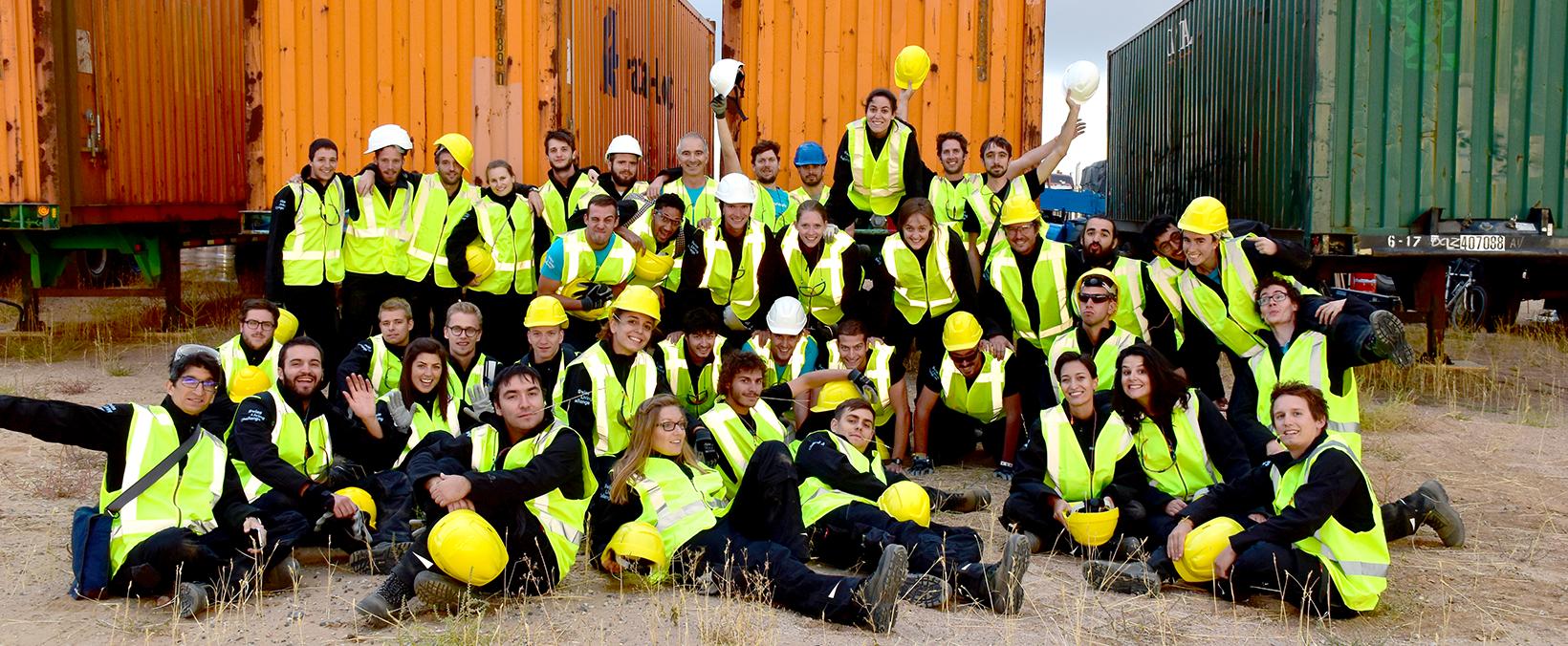
The NeighborHub is a solar house designed and built by over 250 students over 7500 hours, as part of the Swiss Living Challenge project launched in 2015. The aim of the house is to eventually become an eco-responsible and unifying place that brings together local citizens to encourage them to move together towards a more sustainable future.
This Swiss solar prototype was named the overall winner of the Solar Decathlon 2017 international competition in Colorado in October 2017! After its exhibition, the house will be rebuilt this winter in Fribourg on the blueFACTORY site and adapted to the needs of the neighborhood in order to integrate into the city. Indeed, this pilot project is designed to be tested in a real-life setting. Visits to the NeighborHub will be organized this spring.
Overall concept
The Swiss Living Challenge project aims toencourage the Swiss population to reduce their energy consumption and preserve the planet's natural resources. How can we achieve this? To really reduce our energy consumption, we need to take action on a daily basis, from our mobility to our diet. The Swiss Living Challenge project offers alternatives on several levels, suggesting that residents adopt sustainable gestures, thanks to equipment and technical structures.
An interdisciplinary team
4 higher education institutions (EPFL, HEIA-FR, HEAD and UNIFR) joined forces for experimental teaching purposes to create a unique, practice-oriented, multidisciplinary learning environment: engineering, energy, urban planning, environmental assessments, materials, IT, communications, graphic design, fundraising, budget and project management. 150 mentors provided essential advice and experience.
7 levers for action
The NeighborHub will be a place where residents can meet and exchange ideas, and work together to find solutions for consuming less and consuming better. Tools and alternatives will be available for seven levers of action on which we can act: the use of renewable energies, mobility, water and waste management, food, biodiversity and the choice of materials. Local residents will be able to take advantage of advice, interactive activities and conferences on these themes.
1) Energy
Electricity is generated by 29 photovoltaic solar panels installed on the facade only. Two batteries manage the flow of production and consumption to ensure a supply that corresponds to the needs of the inhabitants.
2) Mobility
One of the biggest areas of energy consumption is mobility. A change in our habits, supported by the provision of shared electric cars, bicycles or delivery tricycles, would help reduce our consumption in this area.
3) Water management
The aim of the Swiss Living Challenge is not simply to reduce water consumption. In fact, it's essential to differentiate between the various qualities of water entering and leaving a home, and to assign it the appropriate use or recovery. For example, rainwater collected from the roof is used to power the washing machine.
4) Waste management
The aim is first and foremost to reduce waste, and this means making choices such as shopping in bulk stores, buying food without packaging. As zero waste is not so easy to achieve, reusing objects and recycling remain important points in saving our resources.
5) Food
In the NeighborHub, a communal kitchen is available to residents. They can organize classes to share their culinary knowledge and find tips on how to consume more sustainably. Around the NeighborHub are vegetable gardens where gardening classes can be held.
6) Biodiversity
The green roof and phytodepuration basin provide a habitat for flora and fauna. In addition, vertical greenhouses integrated into the door structure house local plant shoots. Graetzel cells, named after their inventor and a fast-growing Swiss technology from the EPFL, are integrated into these vertical greenhouses to demonstrate that solar energy can also be generated through a process inspired by photosynthesis.
7) Materials
Choosing to be surrounded by healthy materials that don't emit harmful particles and promote good air quality is important for both our health and the environment. The entire structure of the house is made of wood. What's more, 75% of the kitchen worktops are made from recycled materials such as porcelain, ceramics, glass and mirrors.
A modular, adaptable community center
The NeighborHub is architecturally designed to accommodate all these sharing moments with a large multi-functional space. The flexible architecture, mobile or fold-out furnishings, storage spaces with tools available to all, and the entire interior design of the NeighborHub are designed to adapt to activities that can vary as desired: repair cafés, urban vegetable gardens, yoga classes or eco-responsible cooking; all doors are open. Finally, the house can be integrated into different urban environments.
If you'd like to find out more about this trailblazing facility, don't hesitate to contact the team, who'll be delighted to show you around this spring.
