


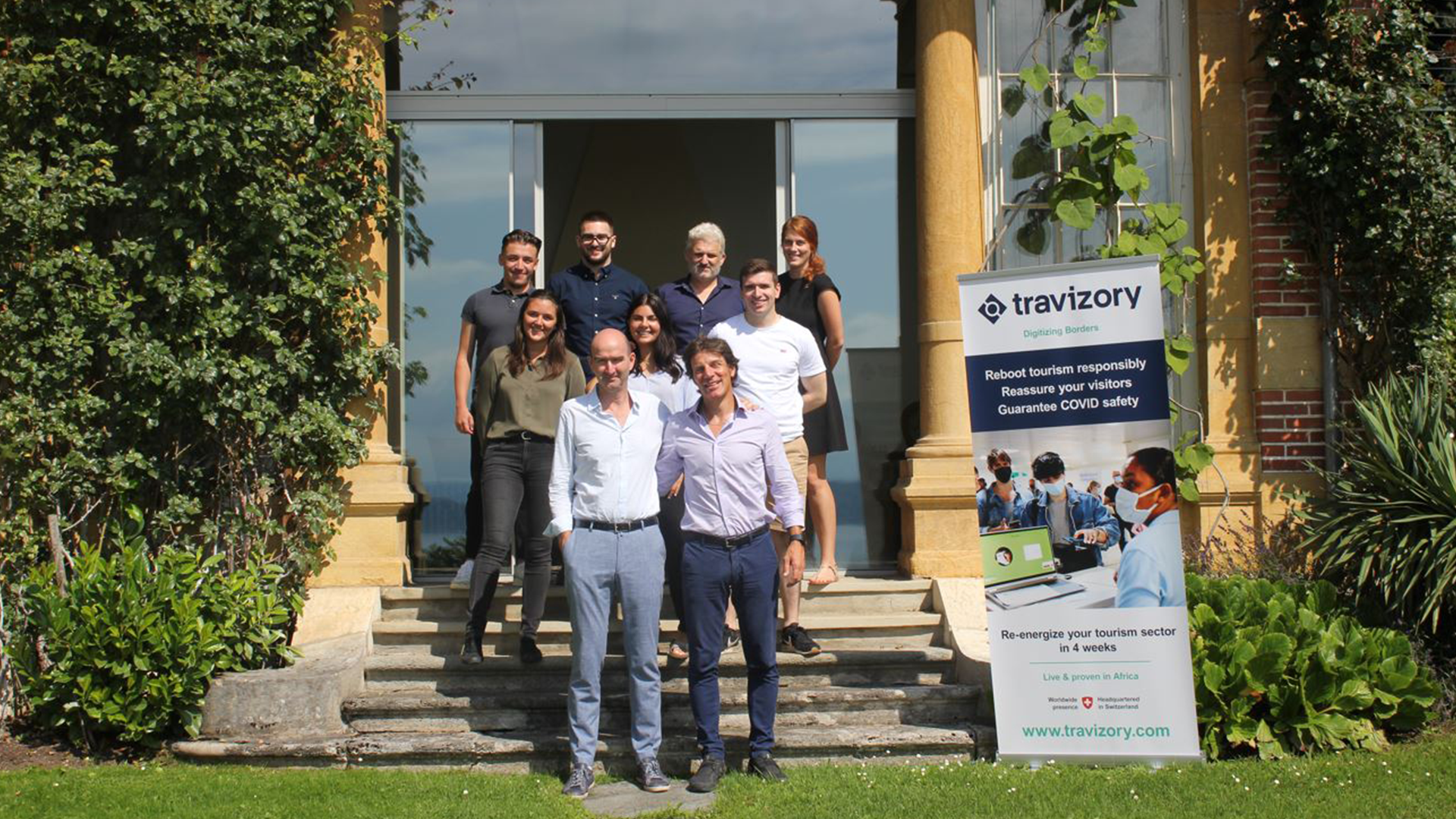
Interview with Travizory, the startup that wants to digitalize border crossings
Thanks to their unique visitor management platform, Travizory helps countries reopen or keep open their borders.
All in a more secure, transparent and fully digitalized process. Their system uses state-of-the-art biometrics, AI and machine learning technologies.
Interview with Ygor Lutz and Renaud Irminger, passionate about digitalization in the travel industry.
Why did you choose the identity management market?
Over 150 countries would be required to implement a travel authorization system similar to the ESTA process in the USA, applying to countries operating without a visa system. However, the user experience was not good with the ESTA system, and other data sources could reinforce security risk assessments. Theultimate goal: to digitalize border crossing, which is currently firmly rooted in the paper world.
The first country to use this solution is the Seychelles.
In December 2019, Travizory had the chance to meet with the Seychelles consular representation and the country's president, who wanted to modernize their border control system. They submitted initial bids, and then COVID-19 surfaced.
Was COVID-19 an opportunity for Travizory?
The crisis acted as a catalyst. All border control systems became obsolete almost overnight. It was now mandatory to analyze health risks. Thanks to a start-up approach, they were able to develop a specific module in just one month.
What are the main advantages of your solution?
There are four main types:
- The user experience is enhanced by the use of smartphones, saving enormous amounts of time, both in preparing documents and in crossing borders.
- The data provided by passengers and the airline is centralized in one place, making it easier to cross-reference data and identify a health or safety risk.
- Thanks to the use of artificial intelligence and machine learning, the process is continuously improved in almost real time.
- The system is based on a "Drag and Drop" interface, enabling countries to configure the tool according to their needs, and modify it in real time.
Source: Neuchâtel Economic Department