

Is Geneva an ecosystem?
This series has taken three distinct paths. The first led to CERN, whose policy of open access to knowledge has permeated Geneva’s economic fabric: spin-offs, technology transfers, and suppliers transformed by their exposure to the extreme. The second path ran through humanitarian organizations, whose operational constraints not only produced data standards adopted worldwide but also permanently raised the bar for an entire city. The third path traversed the financial sector, whose culture of confidentiality has turned discretion into an exportable economic infrastructure.
Three areas, three approaches—and one question that hangs over it all: Do these three successes together form an ecosystem, or are they simply inspiring stories that coexist within the same region?
To mark the 50th anniversary of the Office for the Promotion of Industry and Technology (OPI), Alp ICT takes a look at what makes Geneva unique. Not as a region to be promoted, but as an ecosystem to be understood: a tapestry of constraints, cultures, and practices that, when woven together, form something no plan could have conceived...
A term that deserves better
To answer this question, we must first agree on what “ecosystem” means, and not settle for the rhetorical use often made of the term. In 1993, strategist James Moore proposed a precise definition in the Harvard Business Review. In an economic ecosystem, actors do not merely coexist: they co-evolve. Each is transformed by the others. What circulates between them is not merely economic value: it is a pressure that changes practices and requirements over time. A supplier working for an exceptional client does not emerge unchanged. It is this reciprocal transformation—not mere geographic concentration—that distinguishes an ecosystem from a cluster.
In 2021, two researchers from the University of Geneva, Emilie Dairon and Fanny Badache, applied this analytical framework directly to International Geneva in an article published in *Global Policy*, a journal of the London School of Economics. Their conclusion: Geneva stands out not only for the number of international organizations it hosts (more than 100 headquarters, 177 permanent missions) but also for something harder to quantify: the density and duration of the co-presence of these actors, who weave “complex networks of relationships” among themselves that no other city of this size replicates exactly.
And it is this that allows us to speak of an ecosystem—not as a label, but as a mechanism. It is precisely within this space that the Office for the Promotion of Industries and Technologies (OPI) operates: connecting organizations and making visible the dynamics of an ecosystem that would otherwise function in a fragmented manner.
What is passed down
What connects these three stories is something harder to grasp than a technology or a network: it is, first and foremost, a standard of excellence. Engineers trained at CERN, lawyers specializing in humanitarian data protection, developers whose first client was a private bank—all carry with them, into their subsequent ventures, standards forged under conditions rarely found elsewhere. It is this transmission, across generations and sectors, that drives co-evolution in Moore’s sense. And it is this transmission that allows us to speak of an ecosystem: not as a label, but as a mechanism.
A territory too small to compartmentalize
This transmission mechanism would not work just anywhere. What Émilie Dairon and Fanny Badache have mapped out is precisely why it works in Geneva. Their study, published in 2021 in *Global Policy*, shows that the area where this ecosystem operates is geographically compact: it extends mainly from Place des Nations to the international airport. Within this perimeter of a few kilometers, officials from international organizations rub shoulders with data protection lawyers, engineers from CERN mingle with developers from local startups, and diplomats share the same educational backgrounds as executives from private companies. This is not a metaphor, but a geographical reality. And it is this reality that makes the evolution Moore describes possible: in such a dense space, requirements do not remain confined to the organization that produced them. They circulate throughout the Geneva ecosystem.
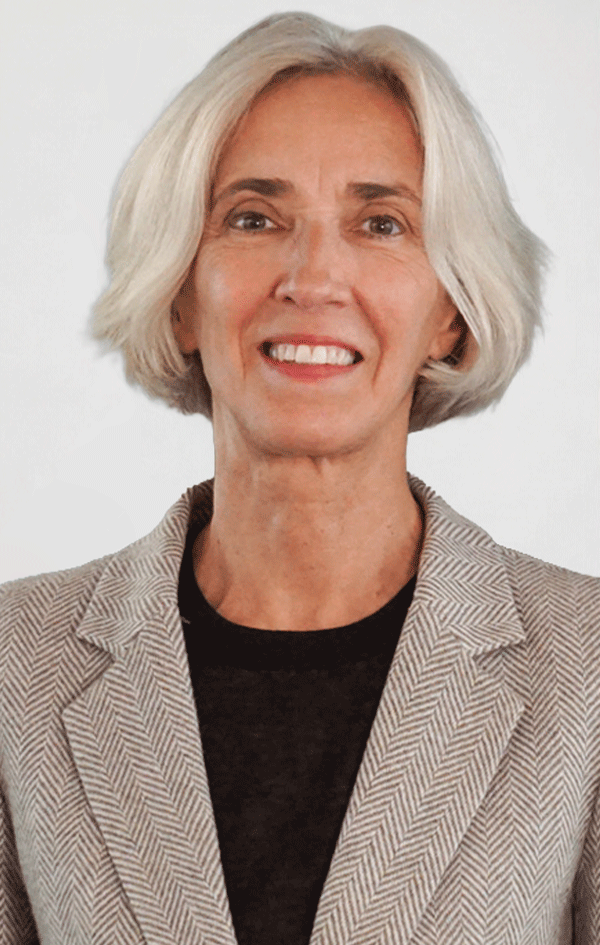
“For 50 years now—more than a generation—the OPI has been serving Geneva’s industrial sector, a time during which talent and innovation have drawn inspiration from the past while forging their own path. This generational bridge reflects an ecosystem that builds its success on sharing and passing on knowledge.”
Hélène Gache, Director of the OPI
Within this ecosystem, OPI occupies a unique position: one that makes connections possible. For fifty years, within this same area, it has been connecting what geography brings together without necessarily uniting: companies, institutions, and research stakeholders. It is this patient and continuous work of weaving connections that allows an ecosystem to recognize its own strengths and build a shared vision. Geneva knows its worth, and it owes this in part to the OPI.

Acknowledgments
This series of articles, produced to mark OPI’s 50th anniversary, is the result of a true collaborative effort. Alp ICT would like to extend a warm thank you to Cédric Fischer, whose skillful writing brought these texts to life; to Jean-Philippe Trabichet for his insightful recommendations, keen eye, and extensive network; and to Delphine Seitiée for steering this wonderful project. Finally, none of this would have been possible without the contributors who generously shared their time, their vision, and their valuable experience.
A huge thank you to: Maïté Barroso Lopez, Michel Warynski, Edouard Crestin-Billet, and Hélène Gache.