

CERN: A Catalyst for Innovation
How Basic Science Fuels Geneva
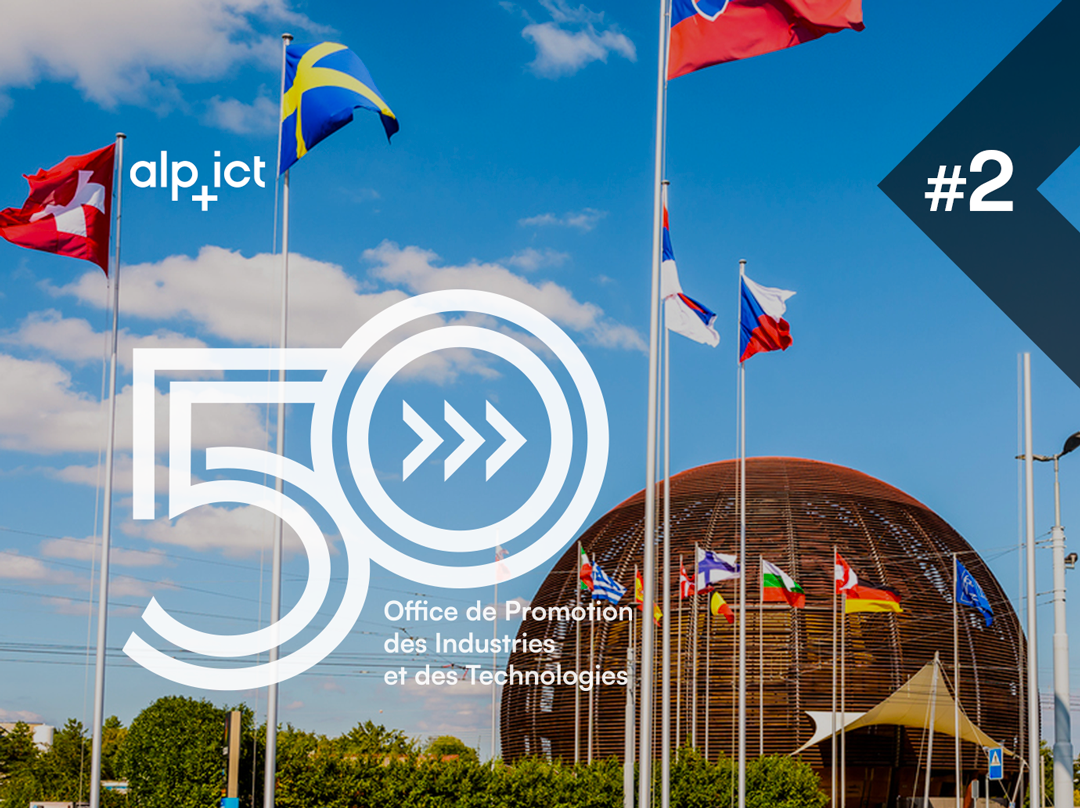
The people of Geneva know CERN from a distance. A tunnel beneath the border, scientists searching for what lies hidden within matter, and—less visible—one of the largest computing infrastructures ever built: a distributed computing network spanning 170 centers in 42 countries, harnessing 1.4 million processor cores. We know it’s huge. What’s less clear is how it relates to Geneva and the companies based there.
To mark the 50th anniversary of the Office for the Promotion of Industry and Technology (OPI), Alp ICT takes a look at what makes Geneva unique. Not as a region to be promoted, but as an ecosystem to be understood: a tapestry of constraints, cultures, and practices that, when woven together, form something no plan could have conceived...
There is a sense of sincere respect within this institution—the kind one feels for something whose importance one senses without always fully grasping its scope. And yet, it was in its offices that a British engineer, Tim Berners-Lee, invented the World Wide Web in 1989, a tool we all use every day. A famous, often-cited example. But is it representative of something more systematic? Does CERN generate expertise, businesses, and practices that spill over into the city of Geneva, and if so, how?
From the lab to the airport roof
Founded in 1954, CERN has a simple mission: to conduct research without any guarantee of immediate application, without clients, and without a defined market. This freedom yields the expected results: Nobel Prizes and an international reputation. It also yields other, less visible but equally real benefits—and, above all, ones that are crucial to the local economy. Take the solar panels at Geneva Airport: they are based on vacuum technologies developed at CERN for particle accelerators. Engineers realized that the same principle could increase the efficiency of solar panels. This shift—from particle accelerators to solar panels—is by no means accidental. It stems from a principle that Maïté Barroso Lopez, deputy head of CERN’s IT department, states plainly:
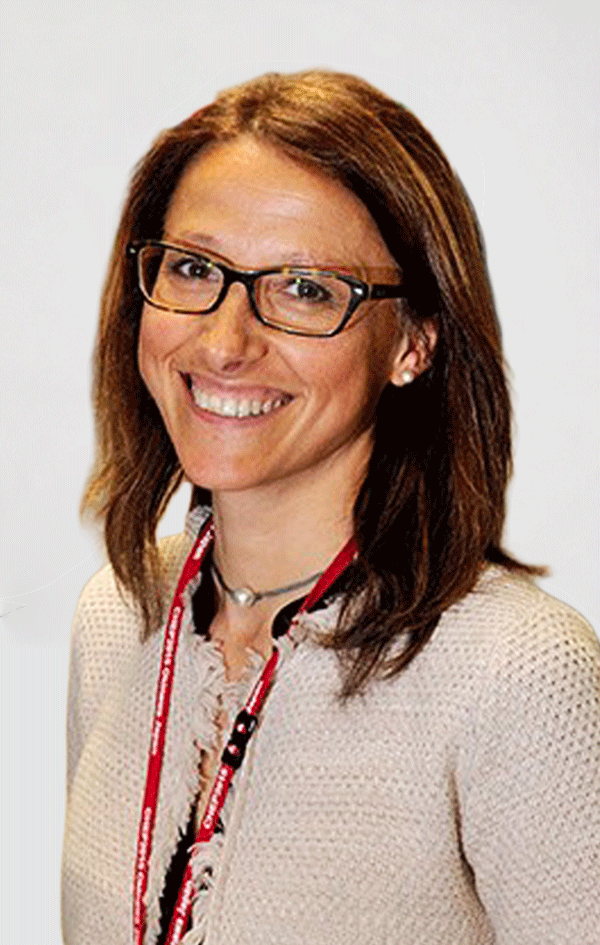
“Everything developed at CERN can be directly transferred to society. In particular, CERN favors an open-source approach to the dissemination of ICT knowledge and technologies, as the Organization’s policy is strongly focused on sharing and collaboration.”
Maïté Barroso Lopez, Deputy Chief Information Officer at CERN
Knowledge cannot be held back
This principle is not just a slogan; it is institutionalized. CERN has stated it unequivocally: knowledge cannot be withheld. Regarding the management of intellectual property, this may involve licensing agreements with specific industrial partners, for example when a technology originating from CERN has significant potential requiring substantial efforts for commercialization. In general, patenting remains limited to cases justifying a significant market presence or impact. The seminal example remains the Web itself, which CERN never sought to patent.
“One of the reasons for the web’s success is that it was released under an open-source license. If restrictions had been placed on access to it, we might not be in the situation we find ourselves in today.”
Maïté Barroso Lopez
This policy has led to the creation of companies active in the health, environmental, digital, and aerospace sectors, which are listed on CERN’s Knowledge Transfer portal.
Technology transfer from CERN to the outside world is not limited to this direct transfer. In fact, a 2024 survey of 1,569 CERN suppliers measured what no one had quantified before: 47% had developed new products as a result of their contract with CERN, 70% reported significant technological progress, and they had observed a positive impact on their sales. This is not a bonus; these are the inherent benefits of the mechanism itself.
From encrypted messaging to nuclear medicine
From encrypted messaging to nuclear medicine
Some have taken this culture beyond the laboratory. In 2014, three physicists who met in its hallways founded an encrypted messaging service. Andy Yen, Jason Stockman, and Wei Sun didn’t just invent a technology; they put a culture into practice: open-source code, data protection, and reliability as a product. They turned something that no one had yet seriously commercialized into a business model. Ten years later, Proton has 100 million accounts worldwide. In fact, its board of trustees includes Tim Berners-Lee, the man who invented the Web more than thirty years earlier.
This momentum continues today through more recent collaborations. Together with the University of Geneva, ID Quantique, HEPIA, OCSIN, and Rolex, CERN is participating in a project focused on quantum communication to develop industrial applications of this technology and strengthen regional technological sovereignty. CERN also supplies radioisotopes, notably to the HUG and the CHUV, for medical research purposes.
Maïté Barroso Lopez describes this relationship with the hospital and the medical school as an “extended campus.”

Infrastructure, not just policy
Infrastructure, not just policy
In the halls of CERN today, you’ll find doctoral students from seventy countries, engineers who will go on to start their own companies, and researchers who don’t yet know what practical applications their work will lead to. But many don’t get very far.
“They come here at a very young age, on short-term contracts, and then stay in Geneva,”concludes Maïté Barroso Lopez. “You find them in banking and industry. Geneva is a rather special place: a compact, highly international city where people interact easily.”
Maïté Barroso Lopez
In 2018, CERN also launched its first Swiss startup incubator at Park Innovaare. Furthermore, CERN’s new program promoting startup creation, CERN Venture Connect, now has 15 partners and 4 Swiss startups, figures that continue to grow. Thus, what had been happening in a scattered manner for decades has finally been recognized, named, and institutionalized. Geneva did not build an innovation ecosystem around CERN. It is CERN that, without having planned it, has become one of its main drivers, demonstrating—perhaps better than any other example—how fundamental science can invigorate a region and extend far beyond it.